PlantNet Plant Identification
- 4.5
- Rating
- 10.00M
- Installs
- Free
- Price

 Analysis by App-foxy
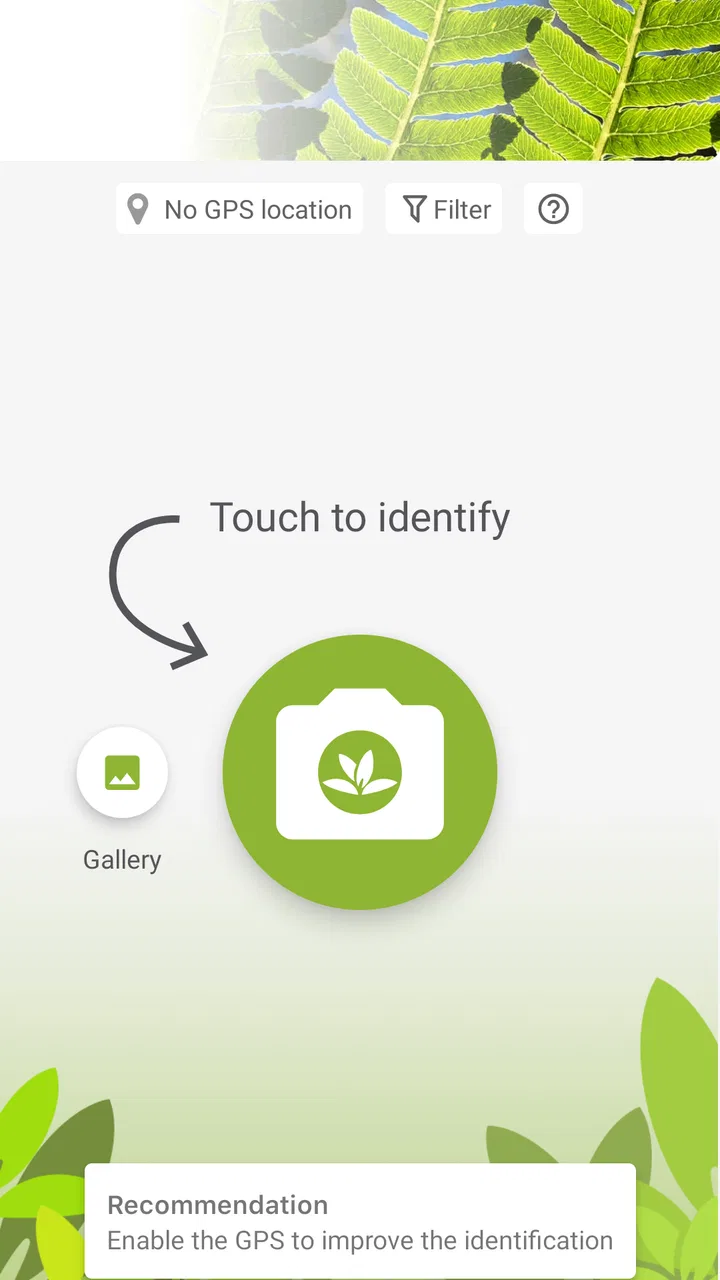
I use plant-identification apps most when I am outside and curious, not when I am sitting at a desk with a field guide open. That is where PlantNet Plant Identification makes the most sense: I point my phone at a wild plant, submit a useful photograph, and use the suggestions as a starting point for learning. It is a free education app from PlantNet, available to everyone aged 10 and over, and its focus is much narrower than a general nature encyclopedia.
After spending time with it, I see the app as a practical visual reference rather than an unquestionable expert. It can turn an ordinary walk into a small identification exercise, but the quality of the result depends heavily on the photograph, the plant’s condition, and my willingness to compare the suggestions. That balance matters, especially for beginners who may otherwise treat the first name on the screen as a final answer.
How PlantNet feels to read and navigate
I find the reading experience most useful when I treat each suggested name as a lead to investigate, rather than an answer to skim past. This section looks at how the app’s visual focus shapes the way I move through an identification and where that approach feels clearer—or less comfortable—than a broad search. I’ll also consider how small changes to my reading routine can make the results easier to compare.
You May Also Like

 Blood Strike: 2.5 Anniversary
Blood Strike’s Loadouts Turn Every Drop Into a Tactical Gamble
A close look at Blood Strike’s custom loadouts: how fast access to signature weapons reshapes its battle royale rhythm, rewards preparation, and narrows the gap between fights.

 Pandora - Music & Podcasts
Pandora’s Music Is Easy to Start, but Harder to Recover
Pandora’s strength is its low-effort path from a seed to a station. Its weak spot is how much confidence it asks you to place in connection, setup, and quiet recovery.

 8 Ball Pool
 Is Built on Rivalries, Rematches, and Routine
A close look at the rivalries, rematches, shared routines, and unanswered safety questions that turn a quick pool match into a persistent mobile community.

 Samsung Music
’s Quiet Strength Is Playing What You Already Own
Its reach comes less from spectacle than from dependable access to a personal library. That simplicity is both the app’s strongest retention engine and its ceiling.

 AccuWeather: Weather Radar
AccuWeather Review: A Quick, Clear Forecast for Everyday Decisions
For everyday plans, the best forecast is the one you can understand quickly. AccuWeather makes rain timing, radar, and local conditions easy to act on, with a few trade-offs.

 Hill Climb Racing
Why Hill Climb Racing Still Turns Crashes Into One More Run
A tiny car, a bumpy hill and one more upgrade: Hill Climb Racing keeps resurfacing because its simple chaos makes every near-miss feel personal.
More From Our News Desk
View All News


A focused starting point for outdoor observations
The app’s basic purpose is easy to understand. I do not have to work through a large collection of unrelated tools before reaching the identification task. That focus helps when I am standing beside a trail or looking at a plant in a garden and want to act quickly. The experience is more direct than searching the web with a vague phrase such as “small yellow flower with narrow leaves.”
For a new user, the most important habit is to think of the camera step as part of the identification process, not merely as a way to upload any picture. A close, well-framed image gives the app more useful visual information. I get better results when the plant is large enough to inspect and when the photo shows a distinctive part rather than a distant view of an entire patch of greenery.
The screen is most comfortable when I slow down and read the candidate names instead of tapping through quickly. Plant names can be unfamiliar, and scientific names are not always friendly to someone who is just beginning. The app becomes more educational when I treat each result as a prompt to compare leaf shape, flowers, stems, and overall structure.
Readable results are only useful when I interpret them carefully
One strength is that the app encourages visual comparison. I am not simply given a paragraph of description detached from my observation; I can use the suggested plant names to investigate whether the visible details actually match. That makes the experience more active than a static reference book, particularly for learners who remember images better than long botanical explanations.
There is also a subtle readability issue for casual users: several plausible candidates can look similar at a glance. If I am unfamiliar with plant terminology, I may not know which feature separates one candidate from another. I would like the app to be used alongside a simple notebook or a separate reference source where I can record what I noticed. Writing down the leaf arrangement, flower color, habitat, and season helps me understand why one suggestion is more convincing than another.
For children or older learners, I would not assume that the app alone explains every result in plain language. A parent, teacher, or friend can make the process more accessible by asking questions such as “What part of the image supports that name?” That turns a potentially confusing list into a guided observation activity.
What the app does better than a normal search
Compared with a general image search, PlantNet gives the task a clearer structure. A web search may return attractive but unrelated photographs, while this app keeps my attention on identifying the specimen in front of me. Compared with a printed field guide, it is faster to consult and easier to carry, although a book can be more satisfying when I want a carefully organized explanation of plant families and identification keys.
Compared with a broad visual-search tool, its specialist purpose is its main advantage. I do not need to describe the plant in words before receiving useful leads. That is valuable for people who do not know botanical vocabulary, including users who find typing difficult or who simply cannot think of the right search terms.
Useful habits for clearer results
I have found three practical habits especially worthwhile. First, I take more than one kind of photograph when possible: a general view for context and a closer view of leaves, flowers, fruit, or bark. Second, I avoid relying on a single damaged or blurry feature. Third, I compare the result with the plant’s surroundings instead of accepting a name that looks attractive but does not fit the habitat.
This workflow is also helpful for people with different learning styles. A user who struggles with dense text can begin with images and gradually connect them to names. Someone who prefers detail can use the observation as a reason to study visible structures. The app does not remove the need to learn, but it lowers the barrier to starting.
Using it with different abilities and real-world conditions
I want to look beyond the screen and consider what happens when the person using the app, the phone, or the outdoor setting changes. PlantNet’s image-led approach can reduce the need to describe a plant in words, but taking and comparing photographs still brings practical demands. The next section explores ways to adapt that process, and when a companion or another kind of reference may be the more workable choice.
Motor considerations when taking the photograph
The camera-based approach can be convenient for someone who finds typing or precise text entry tiring. Pointing a phone at a plant may require fewer steps than describing it manually. In practice, though, taking a good photograph still involves holding the phone steady, choosing a distance, adjusting the angle, and keeping the subject in view. A user with limited hand control may need to rest the phone against a stable surface or ask someone else to capture the image.
That is an important distinction: the identification idea is simple, but the physical action is not equally easy in every situation. Windy grass, moving leaves, uneven ground, and low light can make the task frustrating. I would use the app more confidently with a support such as a bench, walking stick, or companion rather than trying to balance the phone while reaching through vegetation.
Users who rely on one hand may prefer to prepare the scene before opening the camera. I first move into a safe position, clear distracting objects from the frame without touching an unknown plant, and then take the picture. This reduces the number of adjustments needed while holding the phone. It also avoids the common mistake of stepping backward or sideways while concentrating on the screen.
Visual and sensory considerations
Plant identification is naturally visual, so the app is strongest for people who can inspect photographs and compare shapes or colors. Users with low vision may find close-up images more useful than distant ones, but the experience can still be demanding when the difference between candidates depends on a small feature. Screen magnification or larger system text may help with reading names, although the usefulness of those settings depends on the phone and operating system rather than on the app itself.
Color should not be the only clue. Lighting can change how petals, leaves, and stems appear, and some plants have subtle differences that are easy to miss. I recommend taking a photograph in even light and checking the physical specimen as well as the screen. This is particularly important for users who have difficulty distinguishing certain colors; shape, texture, arrangement, and habitat can provide more reliable clues than hue alone.
For blind users, the central visual workflow presents a significant limitation. A screen reader may be able to read interface text, but that does not automatically make the image-based identification process independently usable. I would not recommend assuming that spoken output can replace visual comparison. A sighted companion, a tactile observation where safe, or a more specialized identification service may be a better fit depending on the person’s needs.
People sensitive to bright screens or visual clutter may prefer using the app briefly, then looking away at the actual plant. The outdoor setting can also introduce sensory difficulties that have nothing to do with the software: glare, insects, traffic noise, strong sunlight, or crowded paths. In those situations, taking a photograph first and reviewing it later in a calmer place is a sensible alternative.
Access away from ideal conditions
The app is most useful when I can stop safely and examine the plant. That sounds obvious, but it changes how I use it on walks. On a busy pavement, near a road, or on unstable ground, I do not take out my phone immediately. I make the observation first, move somewhere secure, and then capture the image. This makes the activity more accessible for users who need extra time to position themselves or who cannot comfortably stand and operate the phone at the same time.
A realistic example is a family walk with a child who notices a plant beside the path. Rather than handing over the phone while everyone is moving, I take a picture from a safe distance, let the child describe what they see, and review the suggestions together later. The child gets the discovery experience without rushing, and the adult can explain that an identification result is a clue rather than permission to touch or eat the plant.
The same approach works for a user who becomes tired easily. I can collect photographs during the walk and do the comparison while seated at home. That separates the physical demands of outdoor observation from the reading and learning part. It also gives me time to retake a poor image instead of repeatedly trying to identify a plant in uncomfortable conditions.
Why location and context still matter
A photograph does not capture everything that can distinguish a plant. The surrounding environment, the season, nearby species, and the plant’s size may all influence whether a suggestion makes sense. I therefore treat the app as one part of a broader observation routine. I note where I found the plant and what it looked like in person, especially if the image contains only a flower or a few leaves.
This is one of the app’s most useful educational lessons: identification is not just visual matching. A beginner may assume that a clear flower photograph is enough, but many plants share similar colors and shapes. A full observation reduces the chance of an overconfident mistake and helps users who cannot rely on color alone.
Remaining friction and responsible use
The biggest barrier is accuracy confidence. A result that looks convincing can still be wrong, particularly when the photograph is incomplete or the plant has no obvious flowers. I would never use an app result alone to decide whether a wild plant is safe to eat, suitable for medicine, or harmless to pets. For those decisions, I would seek confirmation from a qualified local source and avoid consumption when there is any doubt.
Another limitation is that the app does not replace a full botanical guide. It is excellent for getting a name to investigate, but users wanting detailed family-level lessons, diagnostic keys, or a structured course may find a dedicated textbook or learning platform more appropriate. The usual alternative of asking a local naturalist can also be better when the plant is rare, damaged, or difficult to photograph.
The app may also feel less helpful when I expect instant certainty. Its value increases when I am prepared to compare suggestions and learn from mistakes. Someone who wants a one-tap answer with no follow-up reading may find the process slower than expected. Conversely, a curious beginner can turn that extra step into the most rewarding part.
Who should use it, and who should choose something else
I recommend PlantNet to walkers, gardeners who encounter wild volunteers, families looking for an outdoor learning activity, and students beginning to notice plant structure. It is especially useful for people who find visual searching easier than typing a technical description. The free price also makes it approachable for occasional users who do not want to commit to a specialist reference collection.
I would be more cautious about recommending it as the only tool for professional fieldwork, safety-critical identification, or users who need a fully nonvisual experience. In those cases, a local expert, a comprehensive field guide, or an alternative service designed around spoken interaction may provide better support. The right choice depends less on how attractive the interface is and more on whether the user can comfortably capture and interpret plant images.
PlantNet has been available since January 21, 2014, and its current version is 3.25.3, with support beginning at Android 7.0. Its scale also suggests that it has become a familiar choice: it holds a 4.5 average from around 261 thousand ratings and has passed 10 million installs. Those figures do not guarantee a correct identification, but they do show that the app has a substantial audience for this particular kind of outdoor learning.
My inclusive verdict
My overall impression is positive because the app makes plant observation feel approachable without pretending that identification is effortless. I like that I can begin with a photograph rather than specialist vocabulary, then use the suggestions to ask better questions. For many users, that is a meaningful accessibility benefit: the first step is concrete, visual, and connected to something directly in front of them.
At the same time, inclusive use requires realistic expectations. The camera process can be physically awkward, visual comparison can exclude some users, and outdoor conditions can make an otherwise simple task difficult. I get the best experience when I adapt the workflow—take images safely, review them later if necessary, use more than one view, and involve another person when independent interpretation is not practical.
My recommendation is to use PlantNet as a patient learning companion, not as a final authority. It is free, focused, and genuinely useful for turning a walk into an observation lesson. If you can work comfortably with photographs and are willing to verify important conclusions, it is a strong addition to an outdoor toolkit. If you need certainty, detailed botanical instruction, or primarily spoken access, I would pair it with a more suitable specialist resource rather than relying on PlantNet Plant Identification by itself.
FAQs for PlantNet Plant Identification
01What is PlantNet Plant Identification, and how does it work?
PlantNet Plant Identification is an app designed to help users identify plants simply by taking a photo. Using advanced image recognition software, the app matches the uploaded image to its extensive database, providing users with detailed information about the plant species, including its name, characteristics, and origin.
02Is PlantNet Plant Identification free to use?
Yes, PlantNet Plant Identification is free to download and use. However, it may offer in-app purchases or features that require a subscription. The free version provides basic functionalities, allowing users to identify a wide range of plant species without any cost.
03What are the main features of PlantNet Plant Identification?
The app offers several features, including plant identification through photos, access to a vast database of plant species, the ability to contribute to the database by adding plant images, and community features to share findings. It also provides educational content about plant biology and ecology.
04Can PlantNet Plant Identification identify all types of plants?
While PlantNet has an extensive database, it may not identify every plant species, especially rare or newly discovered ones. The app is continually updated to include more plant species, and users can contribute by adding new images, improving the accuracy and comprehensiveness of the database.
05Does PlantNet require an internet connection to function?
Yes, PlantNet typically requires an internet connection to access its database and provide accurate plant identifications. However, some basic functionalities might be available offline, and users can upload images later when they have internet access to identify plants.
Pros
- Easy-to-use interface for quick plant identification.
- Supports a wide range of plant species.
- Offline mode available for remote areas.
- Community-driven with user contributions.
- Provides detailed plant information and images.
Cons
- Requires a stable internet for optimal use.
- Limited features in the free version.
- Occasional misidentification of species.
- Some regions have less plant data.
- User interface could be more intuitive.

PlantNet Plant Identification
Gallery